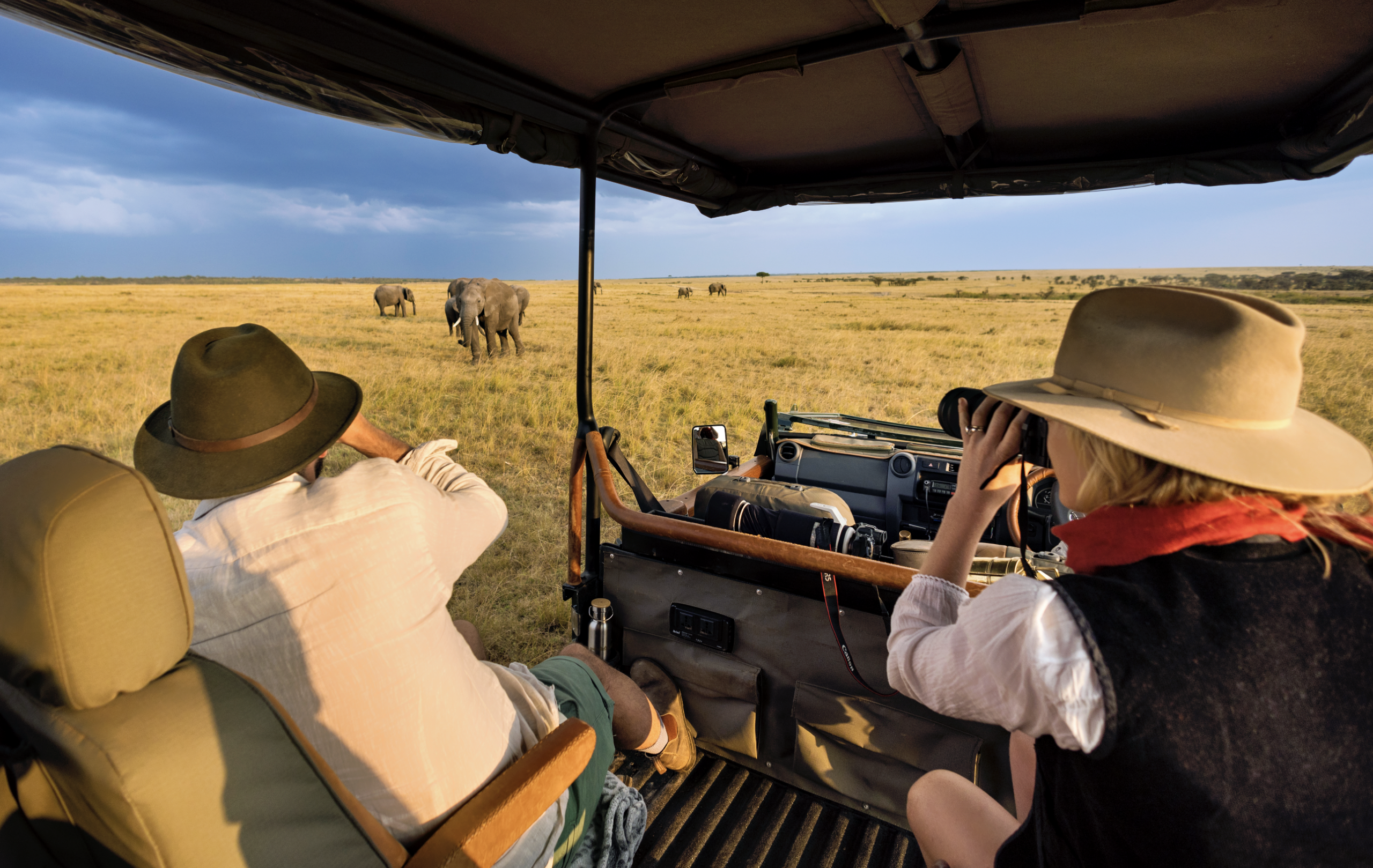
Deep within Kenya’s wildlife-rich Maasai Mara, I’m not peering through binoculars at elephants or cheetahs but threading beads to make a bracelet, along with 20 industrious local women, nimble-fingered in creating the vibrant, intricate beaded jewelry that the Maasai people are known for. The Naboisho Women’s Craft Group has around 100 members and is supported with funds from the Great Plains Foundation, established by Dereck and Beverly Joubert, filmmakers, photographers, and National Geographic Explorers-at-Large. All money made through the Jouberts’ luxury safari camps (a portfolio of 13 across Kenya, Zimbabwe, and Botswana) is pumped back to local community and wildlife conservation projects. Sitting among these women, I feel a wonderful sense of sisterhood. Their pride in creating artisan pieces to sell is also palpable.
“This is a means of income, yes, but what the foundation has crucially provided is a sense of empowerment and purpose,” the cooperative’s coordinator tells me. When my beads have been strung and the cord tied, they start clapping and break into song to wish me well on my safari (meaning “journey” in Swahili).
A Treetop View
I’m staying at Great Plains’ newest camp, the Mara Toto Tree Camp, which opened in the summer of 2024 and is tucked away within a glade of ebony trees in one of the quietest spots of the reserve. This is an elegant explorer’s camp made of wood and canvas, complete with writing desks, roll-top baths, and mosquito-draped, four-poster beds. Four luxurious tented suites are uniquely built on platforms up in the trees, with minimal disturbance to the environment. I’ve a tree soaring through mine, and, by night, the lullaby sending me to sleep is the splashing of hippos in the river below my deck.
Among its many initiatives, the Great Plains Foundation protects and expands natural habitats and practices long-term conservation. To date, 1.1 million acres have been protected, 87 rhinos translocated, 61,000 indigenous trees planted, and 101 elephants reintroduced … but perhaps it is their Big Cat Initiative (a National Geographic-supported endeavor which preserves land for lions, leopards, and cheetahs) that is the most crucial within the Maasai Mara.
“Educating local communities about how man and beast can best live together has been key here,” my Maasai guide, Francis, explains. “Historically, killing a lion was a rite of passage for Maasai warriors, but now we’ve become their guardians. When the Maasai are walking with cattle, they notice if an animal is in distress and they report it to the rangers.”
I see this in action on my first game drive, when two Maasai herdsmen, exercising their grazing rights within the Mara North conservancy, are within striking distance of a pride of lions. “They have a unique understanding that’s often hard for foreign visitors to comprehend. The lions recognise the Maasai’s traditional red cloth and show respect, and they co-exist peacefully,” says Francis.
A Shared Resource
Due to Mara Toto’s close location to the Mara North Conservancy, which is leased from the Maasai people and privately run, Great Plains’ guides are permitted access. Compared with the National Reserve, tourists are far fewer here, and ever-vigilant wardens enforce strict rules about observing wildlife, with a maximum of five vehicles allowed at any one location. I raise my binoculars to see three approaching lionesses on the hunt for dinner. “How do you feel about seeing a kill?” Francis wants to know.
While for many tourists this is the ultimate goal, I falter. It’s an elderly wildebeest the lions have their eye on. We watch as.…
By Kate Wickers
EXCERPT ONLY. CLICK TO READ THE FULL ARTICLE.
This is an excerpt from the latest issue of Porthole Cruise and Travel Magazine. To continue reading, click above for a digital or print subscription.