Barcelona may have the fame and Madrid the grandeur, but Valencia possesses something equally valued in Europe: authenticity. Spain’s third-largest city blends futuristic architecture, centuries of history, and world-class cuisine into a relaxed Mediterranean lifestyle that’s simultaneously sophisticated and unpretentious.
Six previous trips to Barcelona had left us feeling we’d thoroughly explored that city. This time, we opted to spend a day in Valencia before embarking on our Virgin Voyages cruise. Just a 3-hour train trip away, the city turned out to be an inspired choice: less crowded than Barcelona yet every bit as captivating, with fantastic food and a built environment that’s not quite like any other city.
Valencia is a city of contrasts. Gothic towers stand just minutes from the gleaming white curves of the City of Arts and Sciences. Ancient traditions flourish amid cutting-edge design. Nowhere is this balance more evident than in the city’s food culture, where recipes passed down through generations are celebrated with the same passion as innovative modern gastronomy.
RELATED: Valencia’s Fresh Flavors.
Valencia’s greatest pleasures aren’t found on a checklist of landmarks, and there is no better place to begin than at Horchatería Santa Catalina. Operating continuously since 1836, this beloved institution offers the perfect introduction to Valencia and one of the region’s most cherished traditions. Beneath ornate ceramic tiles and centuries-old wooden beams, locals and visitors gather over glasses of horchata de chufa, the sweet and refreshing beverage made from tiger nuts that has become synonymous with Valencian culture. Paired with the warm, pillowy fartons, a pastry designed specifically for dipping, the experience is more than breakfast; it’s a delicious lesson in local heritage and a custom found nowhere else in quite the same way.

Central Market | Photo: Visit Valencia
From Santa Catalina, a short stroll leads to one of Europe’s great food temples. Housed within a magnificent building, Mercado Central overwhelms the senses from the moment you step inside. Home to over 250 vendors, the market is a showcase of Mediterranean abundance. Mountains of citrus fruits glow, seafood counters display the morning’s catch, and the aromas of Iberian ham, fresh bread, spices, and locally grown produce mingle beneath a soaring iron-and-stained-glass dome.
Most of Valencia is easily explored on foot, but the relentless summer sun convinced us to trade the sidewalks for the hop-on, hop-off bus. A €26 pass provides unlimited transportation between the city’s major sights, making it as practical as it is informative.
A few minutes north of our starting point lies the beating heart of the barrio, El Carmen. Cobblestone lanes wind past centuries-old Arab walls, and street art is elevated far beyond graffiti, with entire facades transformed into striking works of imagination. It’s one of those neighborhoods that rarely tops the guidebooks, yet somehow becomes everyone’s favorite discovery.
The journey through Ciutat Vella, Valencia’s old quarter, eventually leads to its spiritual and architectural centerpiece, Valencia Cathedral. Rising above the surrounding plazas, the cathedral tells the story of the city itself, with each century leaving its mark upon the structure. Gothic arches, Renaissance chapels, and Baroque flourishes combine to create one of Spain’s most fascinating religious monuments.

Ciutat Vella | Photo: Loca Barcelona
Beside the steeple stands its iconic Miguelete, the bell tower that’s the beloved symbol of Valencia. The ascent is not for the faint of heart, but each turn of the narrow spiral staircase builds anticipation. At the summit, the reward is a breathtaking view of a sea of tiled rooftops, medieval streets, and the distant blue horizons of the Mediterranean. It is one of those views that instantly transforms visitors from tourists into admirers.
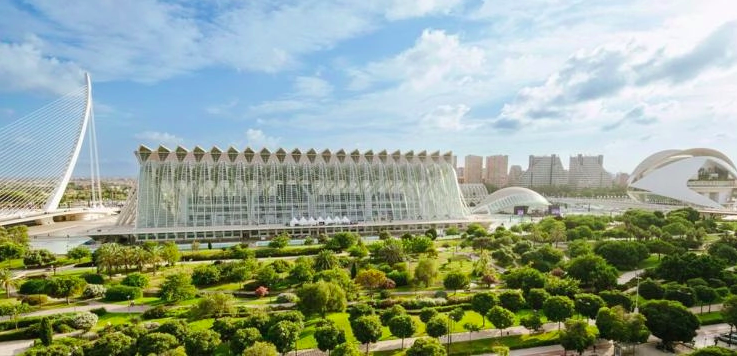
In stark contrast to the old quarter’s plazas and Gothic landmarks, the futuristic City of Arts and Sciences looks like it landed from another world. This dazzling complex of sweeping white structures is home to an opera house, interactive science museum, IMAX theater, and Europe’s largest aquarium.
For a slower pace, we made a quick stop in El Cabanyal, Valencia’s historic seaside district. Once a humble fishing village, this neighborhood’s colorful tiled facades, narrow streets, and laid-back atmosphere offer a refreshing contrast to the city center. We took a sightseeing break and lingered over a delicious seafood paella capped off with a stroll along the beach.

Turia Garden | Photo: Visit Valencia
Threading through the heart of Valencia, the 5-mile-long Turia Garden is one of Europe’s most remarkable urban green spaces. Created in the former bed of the Turia River, the park now connects neighborhoods with gardens, walking paths, fountains, and sports facilities.
Experienced cruisers know how to see a good deal of city in a day but for our visit, an overnight stay afforded an opportunity to sample more of this city’s culinary treasures: rustic taverns offering a parade of tapas and upscale restaurants reimagining regional classics. And, of course, no visit is complete without savoring an authentic paella in the city where it was born
Twenty-four hours may be enough to experience Valencia’s greatest attributes, but it only scratches the surface of what makes the city so captivating. Between its centuries of history, dream-like architecture, golden beaches, and unforgettable meals, Valencia has a way of encouraging you to linger.