Do good things come in small packages? El Toro is the highest point on Minorca, 1,175 feet above the sea. I come for the 1670 Gothic church, but stay for the view, looking to the sea and beyond to hazy peaks 40 miles away: Majorca, the big sister island.
If there’s one thing to know about Minorca, it’s that decades ago, a proposed coastal highway met public opposition and didn’t happen. The dramatic coastline is not shaped by gated communities nor rows of towering hotels and mansions; it is outlined by the 14th-century Camí de Cavalls, the Horses’ Path, once patrolled by soldiers guarding the island from invasion. Today, this is a 115-mile hiking and equestrian route circumnavigating an island where more than half the land is a protected UNESCO Biosphere Reserve.
Residents claim that Minorca has more beaches than Majorca and Ibiza combined. A few popular beaches can crowd up in peak season, but the abundance of coves and hidden patches of sand does make it seem possible. And there is always a trail to get to them.
Ports of Call
On the island’s east end, the capital, Mahón, has one of the largest natural harbors in the world, and its Museo de Menorca is a good starting point for a visit. Some smaller ships stop in Ciutadella de Menorca along the west coast, a town with medieval streets, a cathedral, and a public market. The “underground lake” at Cova De s’Aigua south of there is a partly flooded cave system. A guided tour, easy for all visitors, is hauntingly beautiful. Human bones from a prehistoric burial are visible in the lighted water.
Ironically, the space made from quarrying limestone for the buildings in Ciutadella has itself become an attraction. The quarry, Pedreres de s’Hostal, is now a deep open-air venue for small music performances amid a series of labyrinthine pathways and grottos.
First Humans
The earliest sign of human occupation is from the Bronze Age, about 2000 BCE. Several UNESCO-listed archaeological sites across the island show remnants of stone homes, abandoned caves, and large boat-shaped tombs of the agro-pastoral Talayotic people. (Their name comes from a Catalan word, taula, referencing the T-shaped stone monuments they erected.)
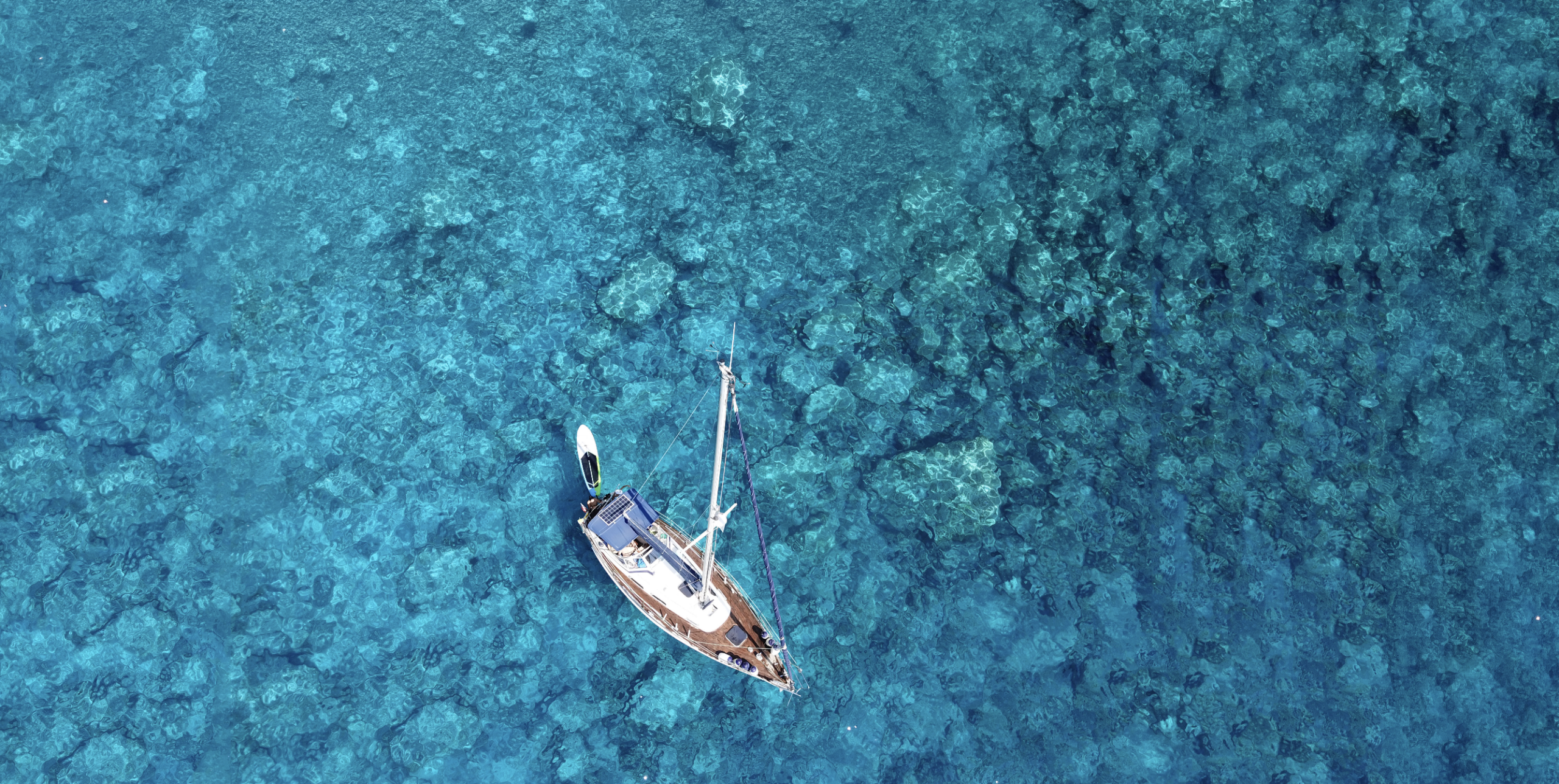
But nothing is more gorgeous than the crystalline waters at Necropolis Castellet de Calescoves. A long row of Tayalotic burial caves are.…
By Kevin Revolinski
EXCERPT ONLY. CLICK TO READ THE FULL ARTICLE.
This is an excerpt from the latest issue of Porthole Cruise and Travel Magazine. To continue reading, click above for a digital or print subscription.