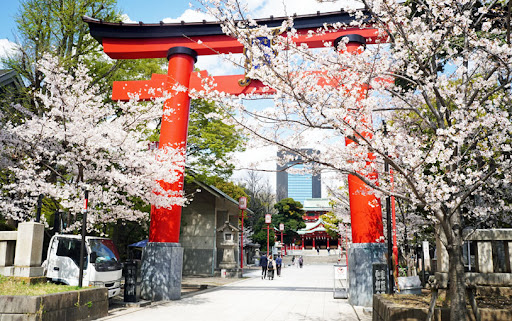
When it comes to discovering a destination, few experiences rival immersion into its culinary world, and in Tokyo that world unfolds with obvious characteristics. From the cinematic glow of neon-lit façades to discreet, family-run counters tucked deep within narrow lanes, the city’s food culture reveals itself in layers, refined, and endlessly intriguing.
In an era where food tours have become commonplace, true access is everything. To navigate the tastes of Tokyo with expert local insight, we turned to Culinary Backstreets, whose enlightening approach elevates the experience beyond the expected.
Guided by both curiosity and appetite, we stepped into the quietly storied streets of Fukagawa in the company of our guide, Diana. In this intimate district, Tokyo softens; time-honored traditions shape daily life. Each dish expresses the precision of generations, and each flavor is inextricably linked to the heritage that creates it.
As we departed beneath the vermilion torii that frame the approach to Tomioka Hachiman Shrine, we made our way into the atmospheric lanes of its quiet streets and began to unravel what elevates Japanese cuisine into a category entirely its own.
My own familiarity with Japanese fare had, until now, been comfortably confined to sushi and ramen. Yet in this setting, it became immediately apparent that these were merely the opening notes of a far more intricate composition.

Fukagawa District
Along the way to our first stop, Diana explained that the Fukagawa district offers a less formal, more human backdrop to life as it was in the era of the samurais, and showed how that history relates to this working class section of Tokyo.
We slipped inside an unassuming storefront where the owner greeted us and led us into a quiet dining room. Shoes off, and anticipation building, we settled around a low table, as a bowl of Fukagawa meshi arrived, rice steeped with tender clams in a deeply aromatic broth. It’s the kind of place you’d never stumble upon, unless led by food insiders.
Though we started at Tomioka Hachiman Shrine, we continued to a nearby Buddhist temple for an authentic blessing ceremony. Rhythmic chanting and reverberating drums built around the controlled intensity of a ceremonial fire.
Returning to the tasting portion of the tour, we slipped into a small shop known for its proprietary miso recipes and traditional Japanese health foods. Pickled vegetables and house-fermented kefir offer a glimpse into a side of Fukagawa where recipes are preserved not as trends, but as inheritances.
No Japanese food tour would be complete without sake, and a stop at a small, pub-style bar provided a natural pause, where delicate pours were paired with lightly grilled stingray fin, crisp fried wasabi, and sake-infused cheese.
The parade of tastes unfolded along the street, and we savored the taste of a delicate chestnut cake, green tea, and plum wine, before gathering toward a finale of sorts.
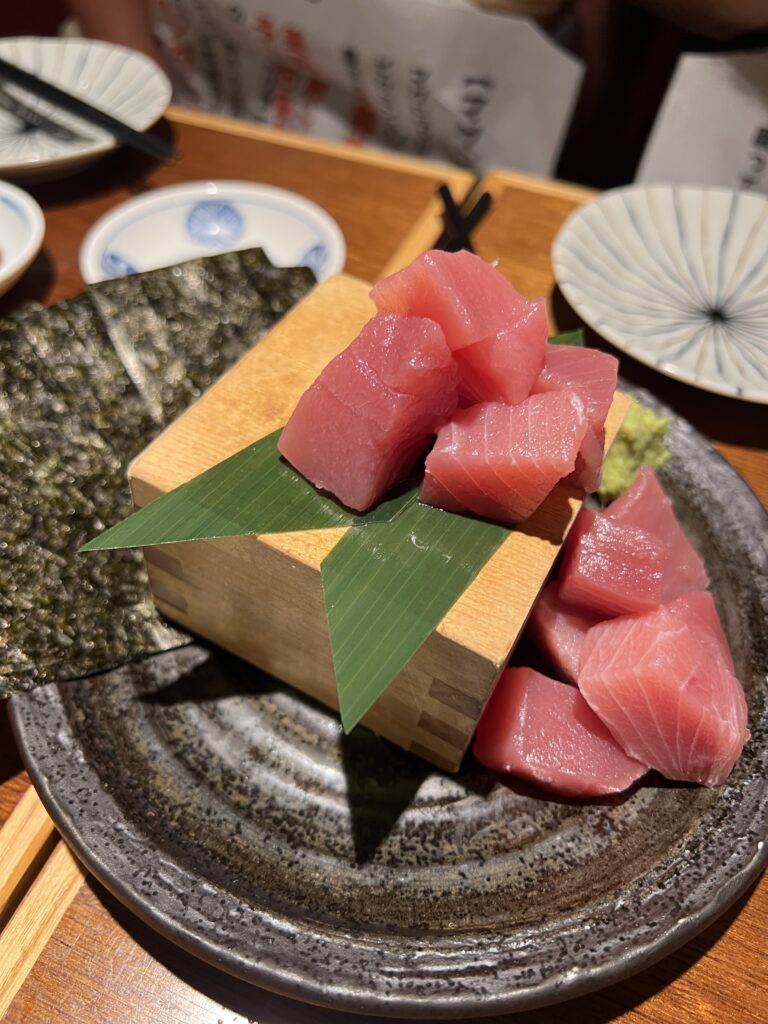
Blue Fin Sashimi | Photo: Steve Leland
The experience built to a main-course feast at a small café devoted to the sustainable use of bluefin tuna. While auction houses prize only the most coveted cuts, here every part of the fish was thoughtfully prepared. Sashimi, tuna meatballs, grilled tuna cuts, and even fried ribs from the dorsal fin more than fulfilled our seafood cravings.
As an encore, a teppanyaki-style café provided a more interactive course, as cabbage and vegetables were chopped and prepared on the tableside grill, then topped off with fish roe, cheese, and a light broth. The result was impressive.
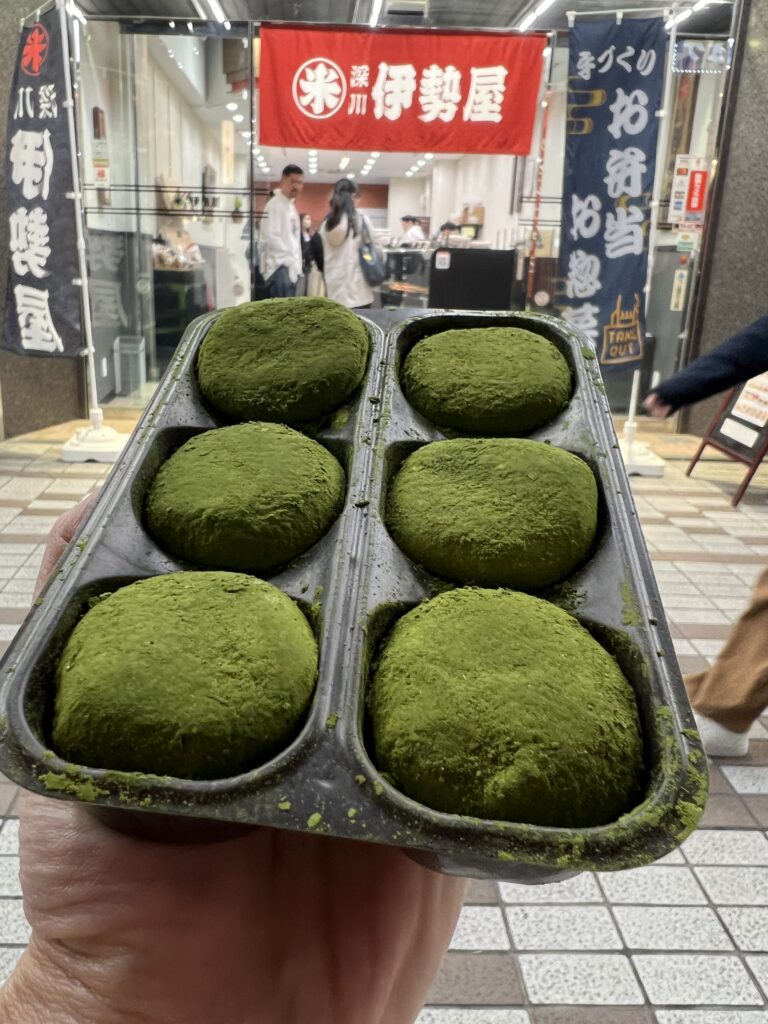
Matcha mochi | Photo: Steve Leland
Finally, our 6-hour tour of taste, culture, and local authenticity had come to a close and our goodbyes were celebrated with a matcha mochi.
Operating in more than two dozen cities, Culinary Backstreets offers a lens into each destination, identifying off-the-radar establishments while weaving in the local history and traditions that quietly shape them.