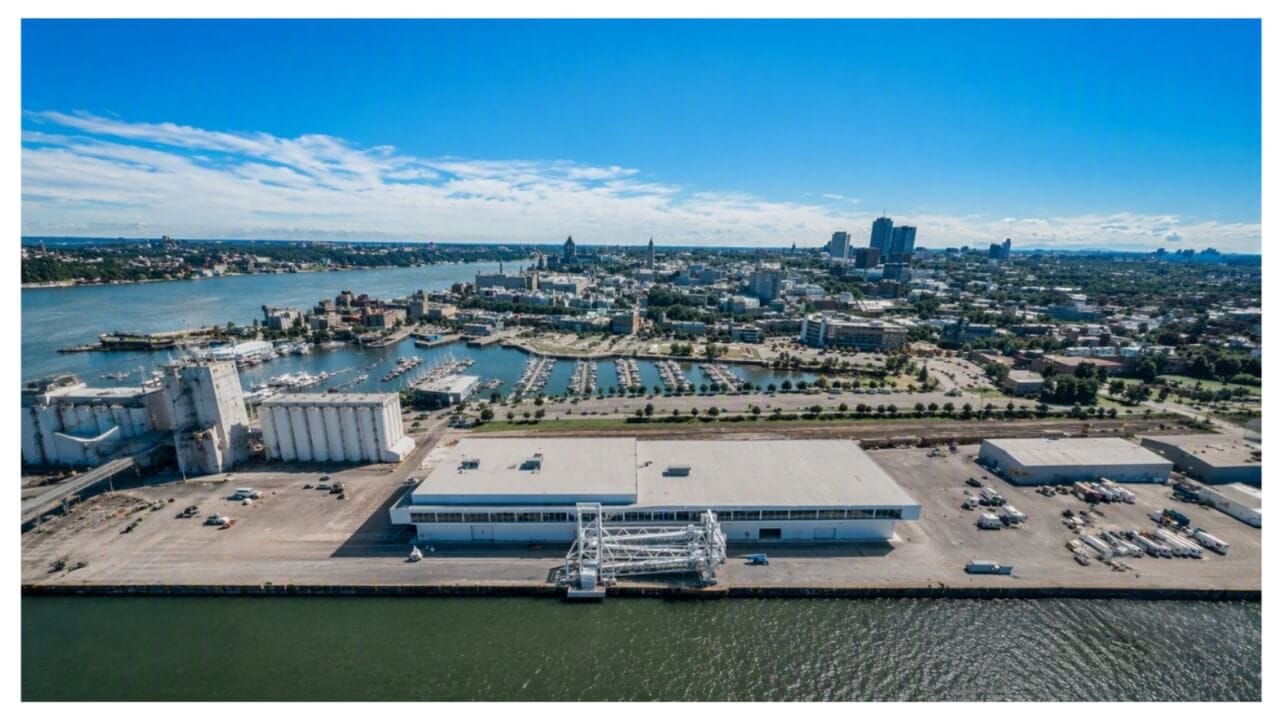
The Port of Québec is moving forward with plans to bring shore power to Cruise Terminal 30, with the 16-megawatt project expected to be operational by 2028.
The approximately $23 million project recently received up to $4 million in funding from the Government of Québec, adding to the $12.5 million previously announced by the federal government. The remaining funding will come from the Port of Québec.
Once complete, the shore power system is expected to electrify about 82 percent of ships’ time spent in port and reduce greenhouse gas emissions at berth by up to 90 percent, avoiding an estimated 70,000 tons of emissions over time.
“Electrification at berth is really important for the cruise lines but also for the community so we’re happy we can go ahead with that and support our industry,” said Marie-Andrée Blanchet, Director of Cruise and International Development for the Port of Québec.
The project is particularly significant for the Canada and New England cruise market, where ships often spend extended periods in Québec City. Nearly 70 percent of cruise calls are overnight stays or turnarounds lasting up to three days, creating additional opportunities to reduce emissions while vessels are docked.
“Port investments like this are essential to the cruise industry’s ability to reduce emissions at berth and continue advancing toward a more sustainable future,” said Bud Darr, President and CEO of Cruise Lines International Association (CLIA). “Québec’s investment in hydroelectric-sourced shore power is important not only for the Port of Québec, but for the broader St. Lawrence and Canada & New England cruise region.”
The project also supports the development of a greener cruise corridor in the region. Montréal, Halifax and New York already offer shore power, while Charlottetown and Boston are installing the technology.
Shore power is the latest component of the Port of Québec’s approximately $70 million investment in Cruise Terminal 30, which can accommodate up to 5,000 passengers and features a flexible design and city-center access.
The port is also studying the feasibility of offering liquefied natural gas bunkering for cruise ships and is conducting a risk assessment on truck-to-ship LNG fueling, which could be available by 2029.