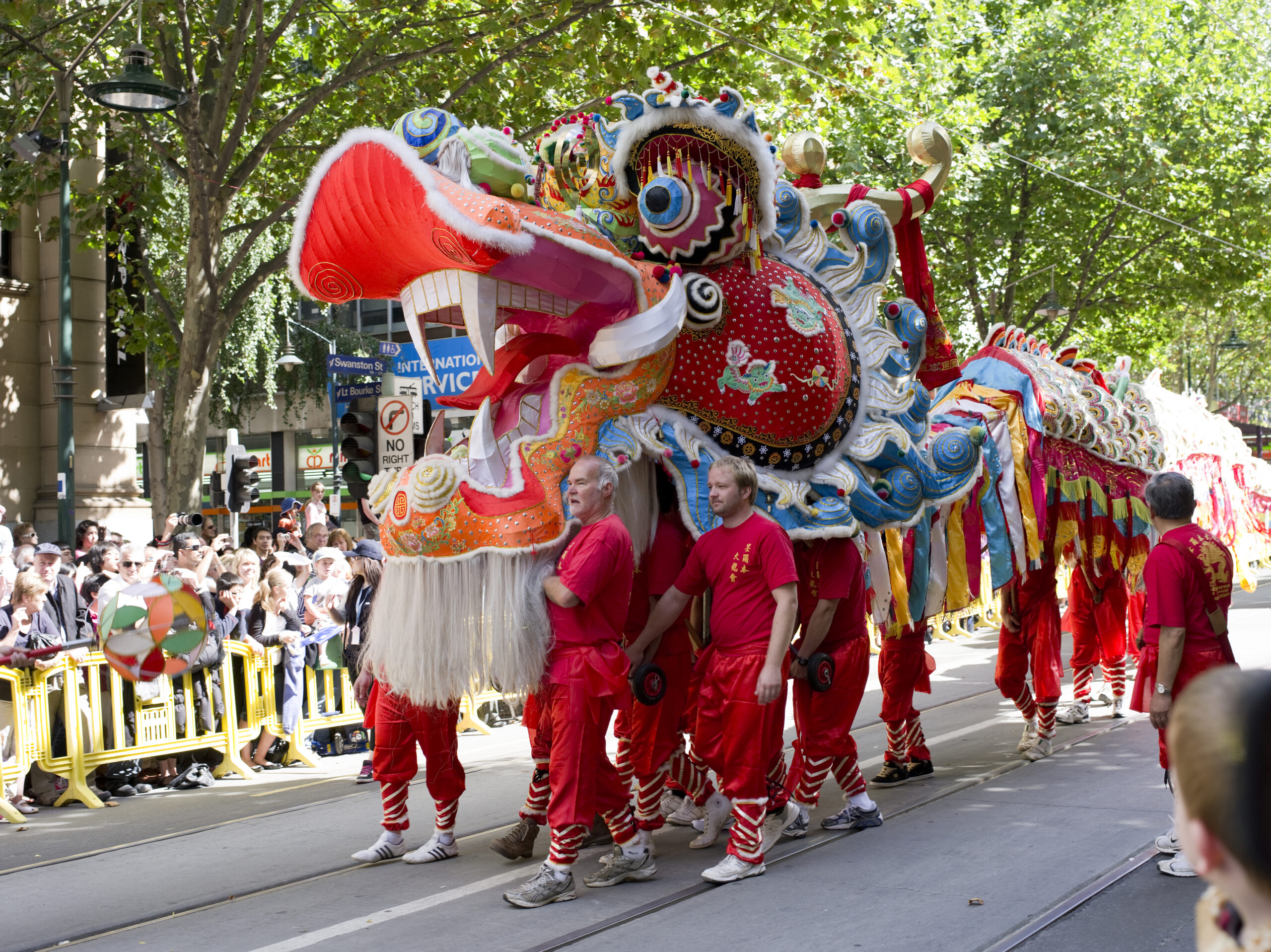
Pop quiz time: what was the bestselling English-language murder-mystery novel of the 19th century? If your answer, like mine, was something by Arthur Conan Doyle or Edgar Allan Poe, you would be wrong. The book, Mystery of a Hansom Cab, and the writer, Fergus Hume, are virtually unknown today, but in the London of 1887, they were all the rage. Half a million readers lapped up the story set in Melbourne, Australia’s, Chinatown, which the book described in lurid detail as a seedy jumble of alleys lined with boarding houses and opium dens.
Reading Hume’s book nearly 150 years after its publication, I was struck not by the mystery (it is highly unimpressive), but by the contrast between the Chinatown of then and now. I had been to some of the book’s locations on previous trips, but wanted to explore the area in greater depth to better understand the story of Melbourne’s Chinatown.
A Neighborhood’s Back Pages
Dating back to the early 1850s, Melbourne’s Chinatown is among the oldest Chinatowns in the world. It started as a handful of boarding houses on Celestial Avenue, housing Chinese laborers who had arrived at Australian shores following the 1851 gold rush in Victoria, the state of which Melbourne is capital. With time, gambling houses, opium shops, and brothels popped up along Little Bourke Street, Swanston Street, and their surroundings, forming the basis of Hume’s descriptions of a slum.
The mining industry declined in the late 1800s, and the area transformed into a wholesale market for fruits and furniture run by Chinese migrants. However, the 1901 White Australia Policy barred non-Europeans from Australia, causing Chinatown to shrink in the 20th century. All the policy’s components were dismantled only in 1976, after which there was a focus on redevelopment of Chinatown to highlight its heritage.
Walking Into the Story
I start at one end of Little Bourke Street near the Southern Cross train station. Hume’s slums have long been replaced by trendy cafés, offices, even an art gallery or two, forming the heart of downtown Melbourne. The street is narrow; Melbourne’s “little” streets were lanes originally added to service the main streets (so Little Bourke Street to service the larger parallel Bourke Street).
I reach the busy Swanston Street intersection, and spot the first of Chinatown’s four paifang, or traditional Chinese archways, at the intersections with four major streets. They were built in the 1970s by a Shanghai-born Australian city councillor who wanted to spruce up Melbourne’s Chinatown and make it a tourist attraction. Two rows of red lanterns line the street, which give it a slightly kitschy aura, but it distinguishes the area amid downtown’s malls and shops.
Some of the street’s buildings catch my eye. The Num Pon Soon building at 200 Bourke Street, built in 1861, is a gorgeous.…
By Arundhati Hazra
EXCERPT ONLY. CLICK TO READ THE FULL ARTICLE
This is an excerpt from the latest issue of Porthole Cruise and Travel Magazine. To continue reading, click above for a digital or print subscription.