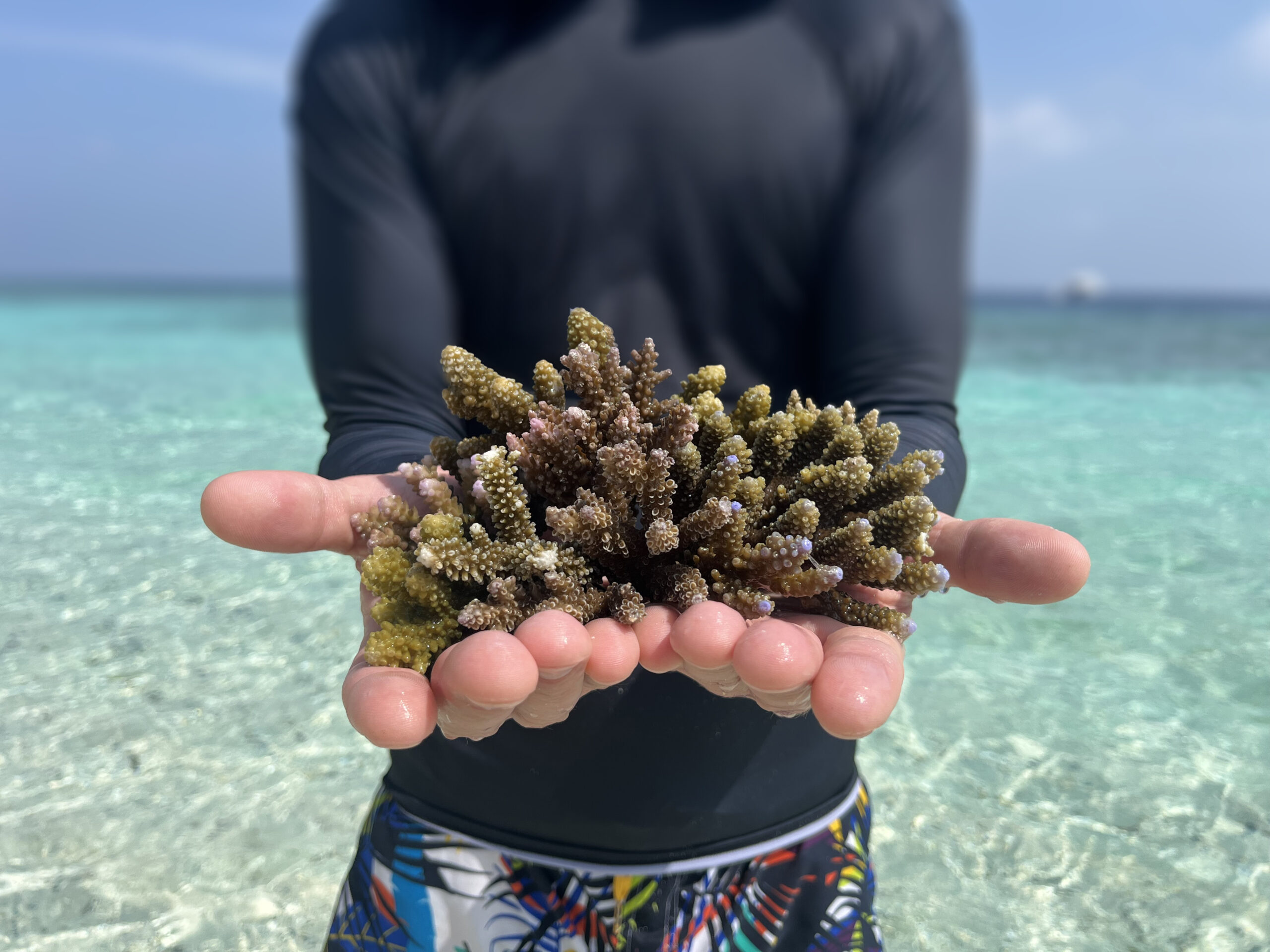
On a balmy morning in the Maldives, I strolled to the dive shop at The St. Regis Maldives Vommuli Resort. The previous evening, I had snorkeled in the Indian Ocean alongside massive marbled rays and nurse sharks underneath the nearby jetty. I’ve returned to the exact location for an altruistic marine-life experience.
I’m here to leave my mark by creating and planting a coral nursery frame for the resort’s growing coral garden. Coral restoration programs aid in preserving and restoring marine biodiversity. It’s a unique travel experience that is more than just fun — it’s educational and makes a lasting impact. Coral reefs are colonies of living creatures that provide oxygen and marine habitat. However, due to the human-induced climate crisis, coral reefs worldwide are threatened by increased ocean temperatures and ocean acidification, which cause bleaching events that result in reef death.
Keepers of the Coral
Awaiting me on the jetty is Hazel Araujo, a Guatemalan marine biologist who manages the on-site project. She’s gathered detached corals from the reef surrounding the atoll. Each piece is a few inches long. We’ll repurpose them to create new coral to grow and replenish the reef’s health. Coral reefs are incredibly fragile, biodiverse, and valuable ecosystems highly impacted by climate change.
“Coral reefs are not just beautiful — they’re essential. The health of our reefs is directly tied to the health of our planet,” Araujo says. Coral is at risk of becoming extinct by 2050, which would be disastrous as they provide habitat for countless species and protect coasts from being eroded away.
Wearing gloves, I carefully zip-tie each broken coral fragment to a frame. As I work on making the coral frame, Araujo teaches me about the risks corals face. “Corals are struggling, which is why active restoration efforts are important. 2024 was one of the largest coral-bleaching events recorded in the Maldives. The average sea surface temperature exceeded 32 degrees C (90 degrees F, above the maximum monthly mean for coral reefs in this region) due to climate change intensified by El Niño conditions,” she says.
During the 2024 mass-bleaching event, healthy coral cover dropped from 95 percent to 25 percent around the St. Regis in the Maldives. When the temperature came back to normal, many coral colonies started to recover. “Within a few months, healthy coral coverage was .…
By Lola Méndez
EXCERPT ONLY. CLICK TO READ THE FULL ARTICLE.
This is an excerpt from the latest issue of Porthole Cruise and Travel Magazine. To continue reading, click above for a digital or print subscription.