
Despite its name, the Panama hat originated in Ecuador. In the 19th century, Ecuadorian hat makers shipped their products to Panama to access larger trade markets. The style gained worldwide fame after President Roosevelt was photographed wearing one during a visit to Panama. Today, this emblem of Ecuadorian craftsmanship is recognized on UNESCO’s Intangible Cultural Heritage List.
Before a Galapagos cruise, a stop at Ecua Andino Hats in Guayaquil offers a look into the hat’s history. Family-owned since 1983, the brand has grown into one of the top producers of Panama hats, with designs worn by celebrities and politicians around the world. In their showroom, hundreds of hats line the walls, and speaking with co-founder Alejandro Lecaro and general manager Daniela Lecaro reveals the hat’s cultural significance.
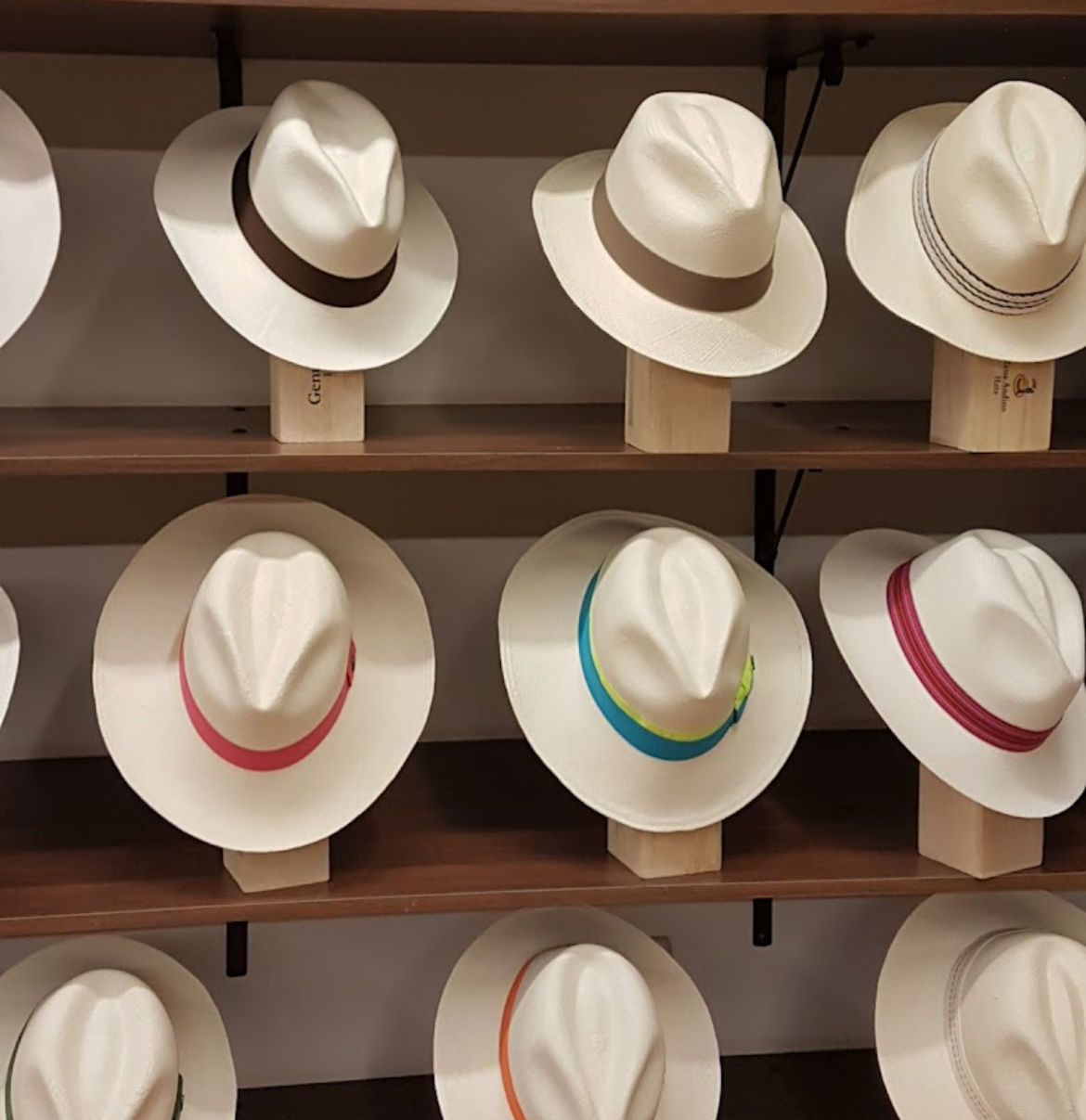
Ecua Andino Hats | Photo: Steve Leland
The hats are handwoven from the plaited strands of the toquilla palm. Depending on the fineness of the straw and weave, production can take from a week to six months. The process includes stripping and boiling the leaves, drying them in the sun, splitting them into thread-thin strands, and weaving them around a block mold to form the hat’s shape.
The finest example is the Montecristi superfinos, made by fewer than a dozen master weavers. Prices range from about $40 for simple designs to $3 million for the most intricate, including one woven by Simón Espinal with 3,906 weaves per square inch.
While colored styles have emerged, the classic off-white remains the most iconic. I once owned a Panama hat bought directly from a weaver in Manta, Ecuador, but lost it to a rogue wind on a Mediterranean cruise. Thanks to a visit to Ecua Andino, I once again have a prized piece of Ecuadorian heritage in hand.


