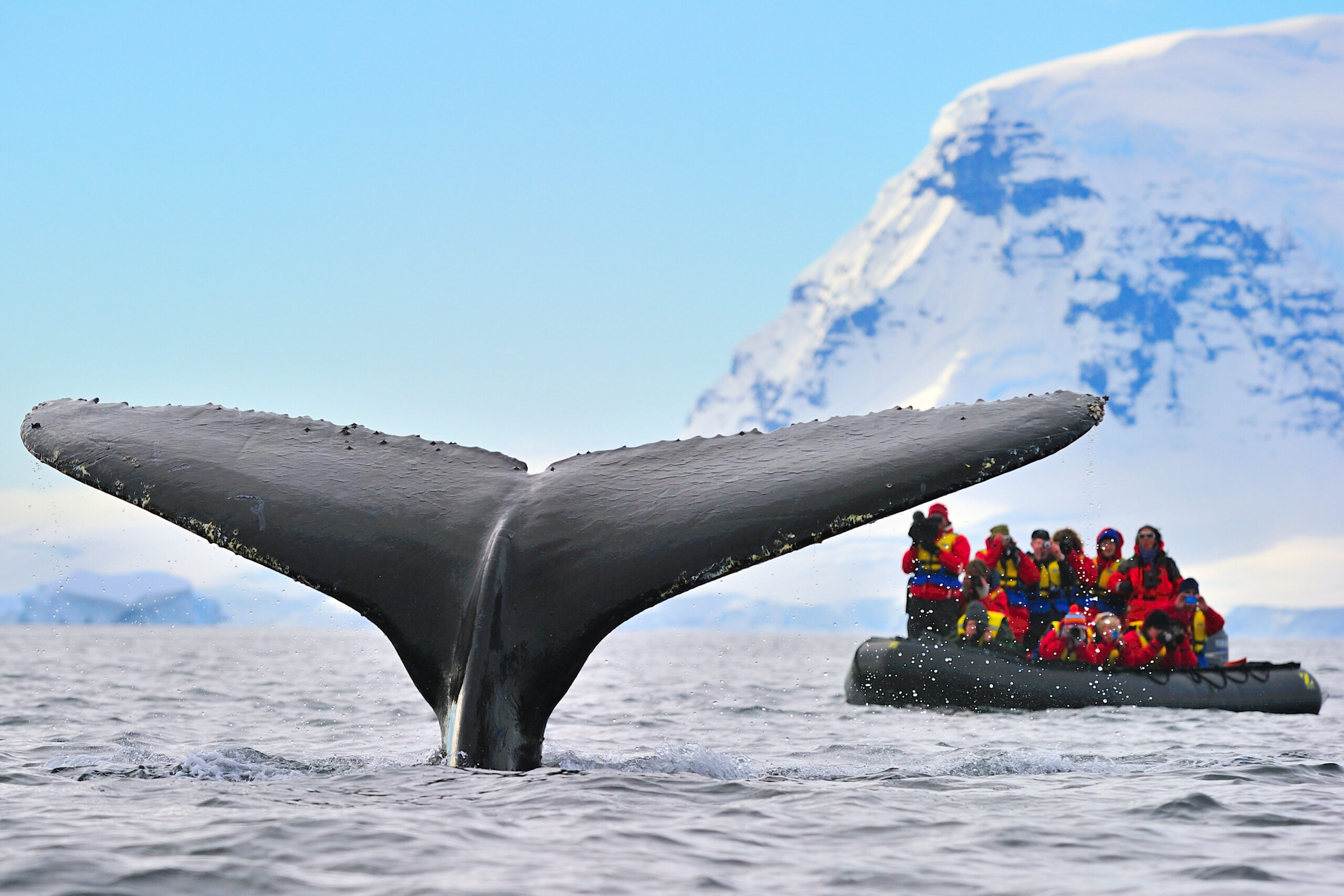
In 2010, I cruised to Antarctica from Ushuaia, Argentina. In the days before the explosion of luxury ships in those epic seas, I traveled aboard a retrofitted Chilean icebreaker with exactly zero bells and whistles. To this day, I can recall the landscapes, the wildlife, and the overall adventure of that trip while the mediocre food and tight, dingy shared quarters have (largely) faded from memory.
Despite the lack of butlers, Champagne, or OTT experiences (no ice camping, scuba diving, or flying over the infamous Drake Passage in those days), my 16-year-old Antarctic experience remains a travel highlight in a lifetime filled with travel.
I was one of about 35,000 travelers who went to Antarctica in 2010. The 2025-26 season saw around 113,000 tourists during Antarctica’s slim, 5-month season, November to March, according to the International Association of Antarctica Tour Operators (IAATO).
High numbers, high risk
Such a surge in the number of visitors to Antarctica — and the number of ships serving them — has inevitably brought environmental threats. In the early 2000s, when I first visited, the ships themselves and contaminants they carried were seen as the biggest tourism-related environmental threat to Antarctica, prompting the International Maritime Organization to ban heavy fuel oil in Antarctic waters in 2011. Today, many believe the biggest tourism-related environmental threat to Antarctica is much, much smaller.
I did not know that when I boarded SH Diana for a Swan Hellenic luxury expedition trans-Atlantic repositioning cruise from South America to South Africa via the Antarctic Peninsula and South Georgia Island.
Unlike Antarctic Dream, the newest vessel in the Swan Hellenic fleet is part of the ongoing proliferation of swanky ships in Antarctica. She’s packed full of high-luxury and high-tech, some of which came into play as soon as we pulled away from the dock in Ushuaia, Argentina and began crossing the Drake Passage. The Atlantic and Pacific Oceans collide in the Drake Passage, and the stretch is notorious for its rough seas.
My crossing of the Drake in 2010 on the slow and low-tech Antarctic Dream took three days. Seas reached 60 feet. Plates slid off the dining room tables. Some passengers didn’t leave their cabins, laid low by seasickness or heavy-handed medications against it. On SH Diana, the ability to cruise at 14 knots meant we crossed the Drake in just over a day. And ship design innovations, including large stabilizers under the ship’s hull, meant I only had to take a few Dramamine tablets during the entire crossing.
True luxuries
A far more important difference between my first Antarctic cruise and my second was about to become apparent. Soon after crossing the Drake, passengers were summoned to a mandatory briefing during which expedition team members explained that the introduction of invasive species is one of the top environmental threats posed by tourism in Antarctica today. Therefore, anyone who wanted to take part in explorations off the SH Diana was required to gather every item of clothing and gear that he or she intended to wear or carry during excursions and bring all of it to the ship’s Observation Lounge.
Under the watchful eyes of expedition guides, all seams, zippers, pockets, cuffs, strips of Velcro, etc. were examined, scrubbed, and, in some cases, vacuumed so that no seeds or spores would accidentally be transported to shore.
I don’t remember any talk of invasive species or any gear.…
By Karen Catchpole
EXCERPT ONLY. CLICK TO READ THE FULL ARTICLE.
This is an excerpt from the latest issue of Porthole Cruise and Travel Magazine. To continue reading, click above for a digital or print subscription.