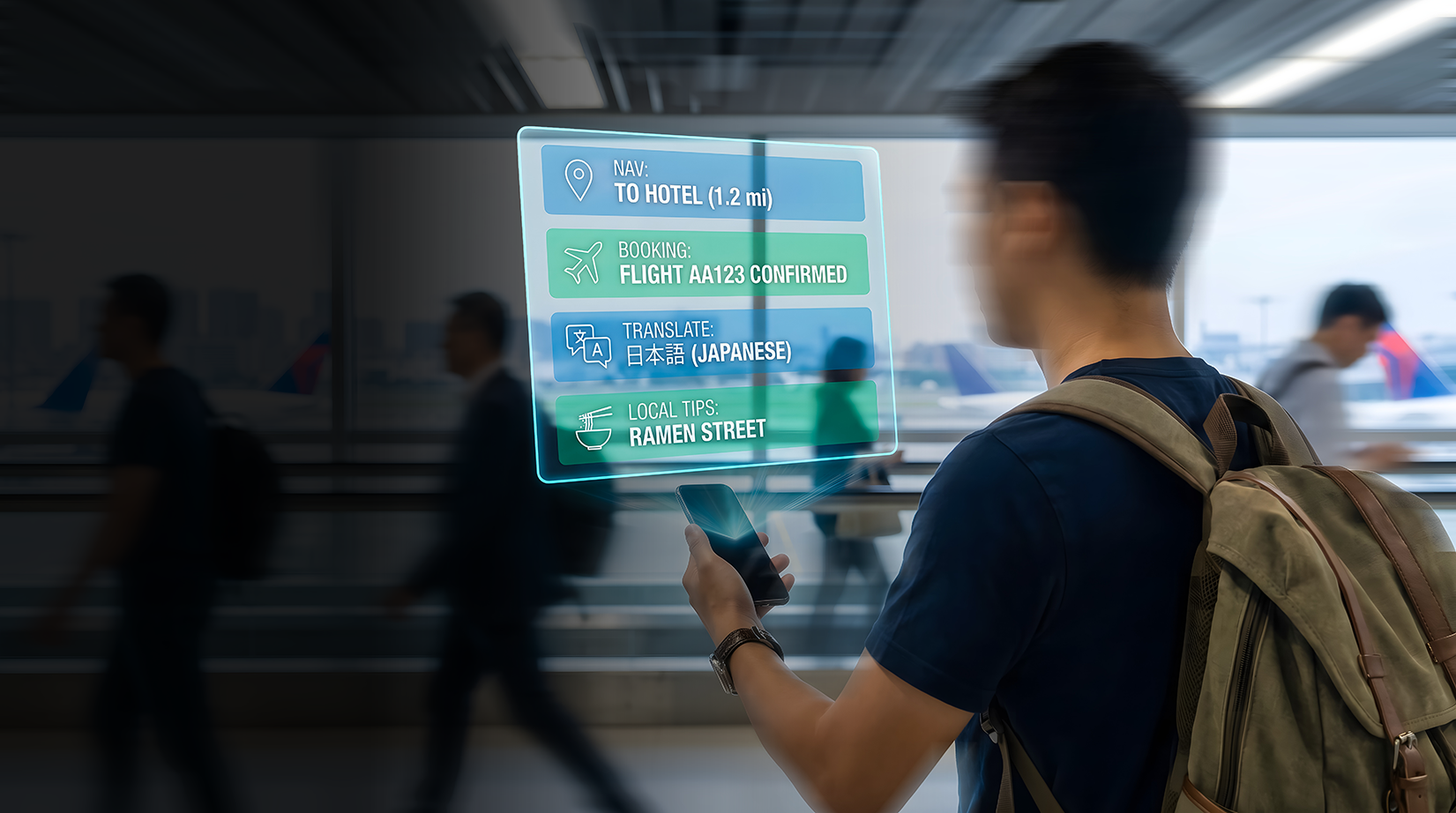
Recently, the editors of Porthole got an interesting letter from a reader asking a question: “I’ve been seeing videos online about new rules regarding seniors on cruises in 2026. Can you share what you know about these new rules and if they are true and should be adhered to?”
What our research staff found was a raft of videos based on “medical denial of boarding” causing anxious older folks to get turned away at the cruise terminal and then denied any refund or future cruise credit. The thing is, all the videos had certain things in common:
- They took a long time to name what it was they were warning about. Instead, they repeated near-identical vague warnings about horrible outcomes without getting to the point.
- They never named an authoritative source that could be checked elsewhere. Instead, a nameless narrator made claims like, “as a professional with more than 20 years in the industry….”
- They never gave full names or identifying details to any of the supposed victims, only general descriptions and, at best, first names, like, “Jane, a retired schoolteacher from the Midwest.” It was impossible to see if any of these people were real.
- The imagery tended to be a little too perfect and a little too generic. The scenes were polished, but brand names were obscured, and the people, even with worried faces, looked like they could have been models in a catalogue.
It became clear that these videos all had one thing in common: They were being mass-produced using artificial intelligence. And real travelers were watching these AI videos and becoming concerned … by design. The more people watch the videos, the more money they make for their creators.
For the record, there is such a thing as “medical denial of boarding,” though it is rather rare. (If you’re worried about it, ask a travel advisor about travel insurance — it’s usually cheaper than you think — and consult the official guidance from the U.S. Department of State and the CDC Yellow Book.) What’s not real is any rising tide of travel professionals concerned about it.
Instead, the travel industry — including travel publishers like Porthole Cruise and Travel — is increasingly concerned about how AI is eroding public trust. A recent Expedia Group survey found travelers were happy to let AI suggest itineraries or find deals, but nearly 70 percent of travelers prefer booking with trusted travel brands over AI chatbots and agents. Two-thirds (66 percent) say they would not trust an AI assistant to buy or book anything on their behalf.
AI has made it easy for anyone to create professional-looking media. AI-assisted scams have generated fake booking confirmations or even deepfake customer service representatives to steal credit-card details. They can generate “urgent alerts” that trick travelers into clicking links for malicious websites at home and overseas.
A different survey, by the AI-agent company Ada, found 47 percent of consumers say travel has become more stressful and unpredictable … but for most, the answer is the human touch. Sure, computers are fast and excel at collating a dizzying amount of data (weather reports, mileage to nearby destinations, fuel prices, and dozens of other factors). But 53 of respondents say human support should always be available, even when AI is used, and 28 percent say one bad AI experience with an airline would make them switch airlines entirely.
Being misled by AI is becoming more commonplace. You might remember a viral New Year’s Eve moment, when an AI-generated Tik Tok video of a “free fireworks display” brought hundreds of New Yorkers out to Brooklyn Bridge Park, only to discover it was a complete fabrication. At least most of them didn’t have to pack a bag and buy a ticket to get there.
Travel as a business is based on trusted personal relationships. In an age in which social media creates the illusion of personal relationships with “friends” and influencers, business leaders are working out new ways to create and maintain those human connections.
Here at Porthole, we rely on the trust of our readers. We’re introducing a new set of guidelines for how we use AI in our pages.
Writer Guidelines for AI
A note from the Editors’ Quarters:
Computers are tools, not collaborators. Using digital assistance for research, fact-checking, and collating and organizing data is fine; having an AI create your “vibrant,” “enduring,” “culturally rich” prose, misattribute or mangle direct quotations, hallucinate basic facts, or generate a final draft without your human oversight constitute crimes against travel journalism. Violators will be subject to the harshest penalties under maritime law: taken into international waters and obligated by our onboard associates to walk the plank.
Seriously, Porthole Cruise and Travel is based on real people having unforgettable experiences in real places around the world. Our readers want to know what ships are really like, how it really feels to ride luxury trains, or what to expect while actually traveling through very real regions far from home (or just around the corner). The journeys may be fantastic, the stories may inspire dreams, but our readers demand and deserve writing that is anchored in reality.
We want your unique insights and your personal experiences. We do not want mashups of pre-existing works fed into a Large Language Model en masse, nor are we in the market for “vibe-coded” pseudo-remembrances. Our whole purpose as a publication is to go beyond the algorithm’s expectations.
Our AI policy:
- We do not publish stories with text generated by AI. Some online news articles may be largely based on press releases, but these will be condensed, rewritten, and given greater context to the best of our professional ability.
- We do not publish material that has not been checked and re-checked by human professionals. We may use AI to organize, for instance, lists of upcoming newbuilds or destinations on a line’s Caribbean itineraries, but that information will be double- or triple-checked to the best of our professional ability.
- We do not publish images solely generated by AI. Image-editing tools may extend a horizon or smooth over a low-resolution photo; the landscapes, ships, and story subjects will always be 100 percent real.
We may use LLMs or other digital assistants to suggest compelling story ideas or to inspire new approaches, just like any new tool can open up new ways of doing any job. But we take pride in our experience as journalists and as travelers, and will always use that professionalism to shape everything you see in Porthole.
By Porthole Cruise and Travel
To read more cruise and travel reviews like this, subscribe to Porthole Cruise and Travel Magazine.