Imagine you and a few dozen new friends celebrating Christmas by watching penguin chicks take their first steps. Seals doze on drift ice and the tail of a minke whale disappears underwater. It’s early summer in Antarctica and the huge white continent is coming to life.
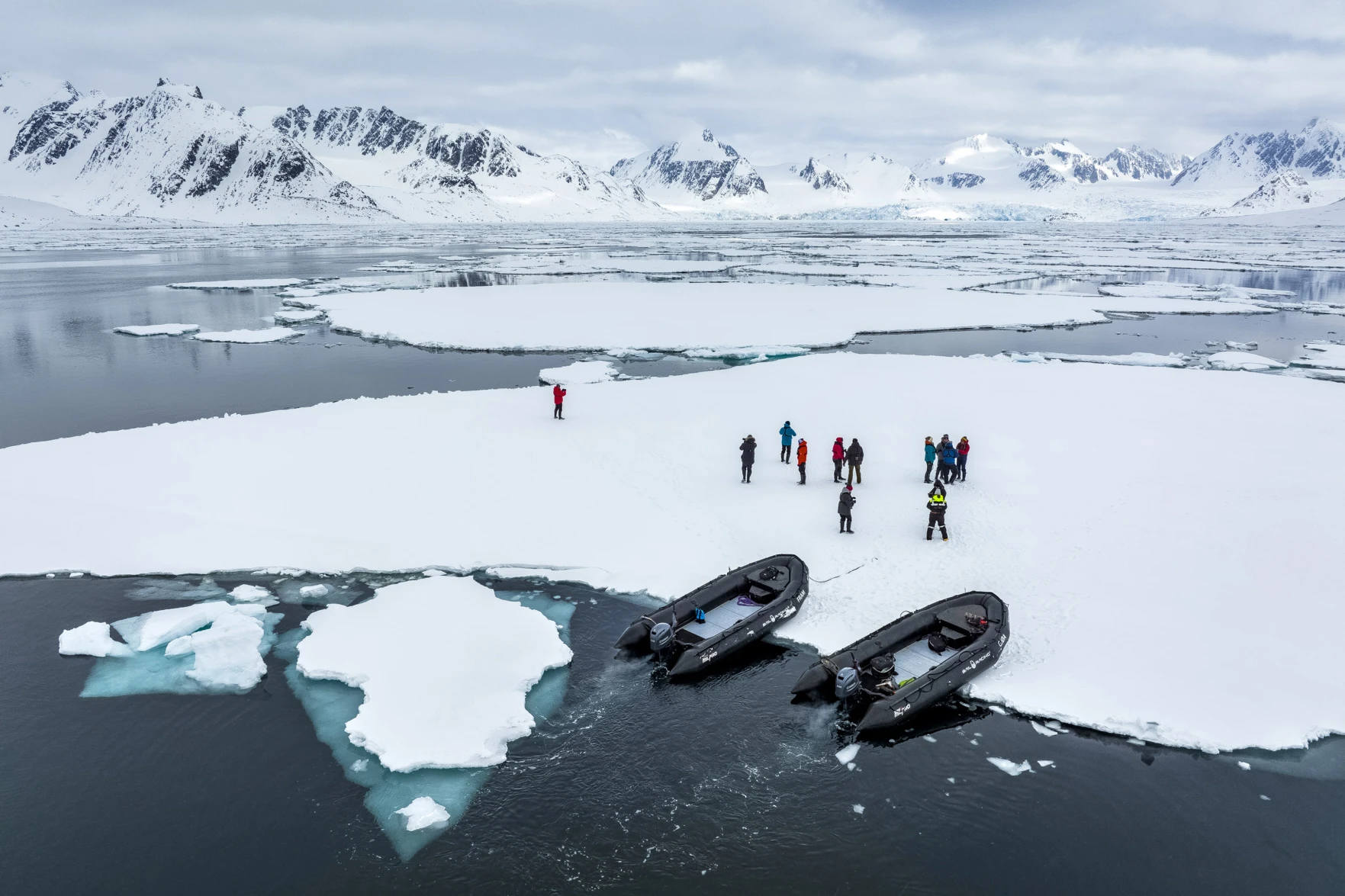
In the vastness of Antarctica, Secret Atlas invites you to think small. This cruise line is known for its microcruises in polar regions. Secret Atlas operates boats like the 44-passenger MV Polar Athena for the smallest group size in Antarctica. And in the Arctic, Secret Atlas goes even teenier, leading 12-passenger cruises and photography expeditions into Greenland and Svalbard.
“If you want to see wildlife, if you want to have a versatile platform, if you want to spend time on land hiking, if you need time for photography, if you want to stay out there as much as possible, forget about the rest of the industry. Go micro,” says Michele D’Agostino, owner of Secret Atlas. An Italian-born explorer who’s been fascinated with polar regions since childhood, he and fellow Arctic enthusiast Andy Marsh co-founded Secret Atlas in 2019. “Our product is extremely different from the rest of the industry because we are in the business of time.”
D’Agostino defines microcruises as fewer than 50 passengers, a size which means no one waits in line and there are no rotations due to group limits at landing sites, including at South Georgia.
Mindfully Micro
Traveling to the polar regions is controversial. Journalist Sara Clemence’s widely-read 2023 Atlantic article described Antarctica as “the last place on Earth any tourist should go.” She points out that as climate change melts sea ice, ships can more easily visit and tourism increases, causing a vicious cycle. Plus there’s the environmental impact of long flights to the tip of South America to board cruises. The International Association of Antarctica Tour Operators reported that in the 2024-2025 season, Antarctica had 36,769 cruise-only visitors, 80,434 landed visitors, and 938 who traveled deeper into the field.
“I think it’s a fair point,” D’Agostino says about environmental concerns of tourism in Antarctica. “Look at the Galapagos, look at the Inca Trail,” he says. “These are examples that we need to learn from. We as micro operators welcome regulation. I genuinely think that our approach is intrinsically sustainable because.…
By Teresa Bergen
EXCERPT ONLY. CLICK TO READ THE FULL ARTICLE.
This is an excerpt from the latest issue of Porthole Cruise and Travel Magazine. To continue reading, click above for a digital or print subscription.